ART EMOTION FLOW
Healing through Light: The Historical Context and Psychology of Joaquín Sorolla’s 'Eternal Summer
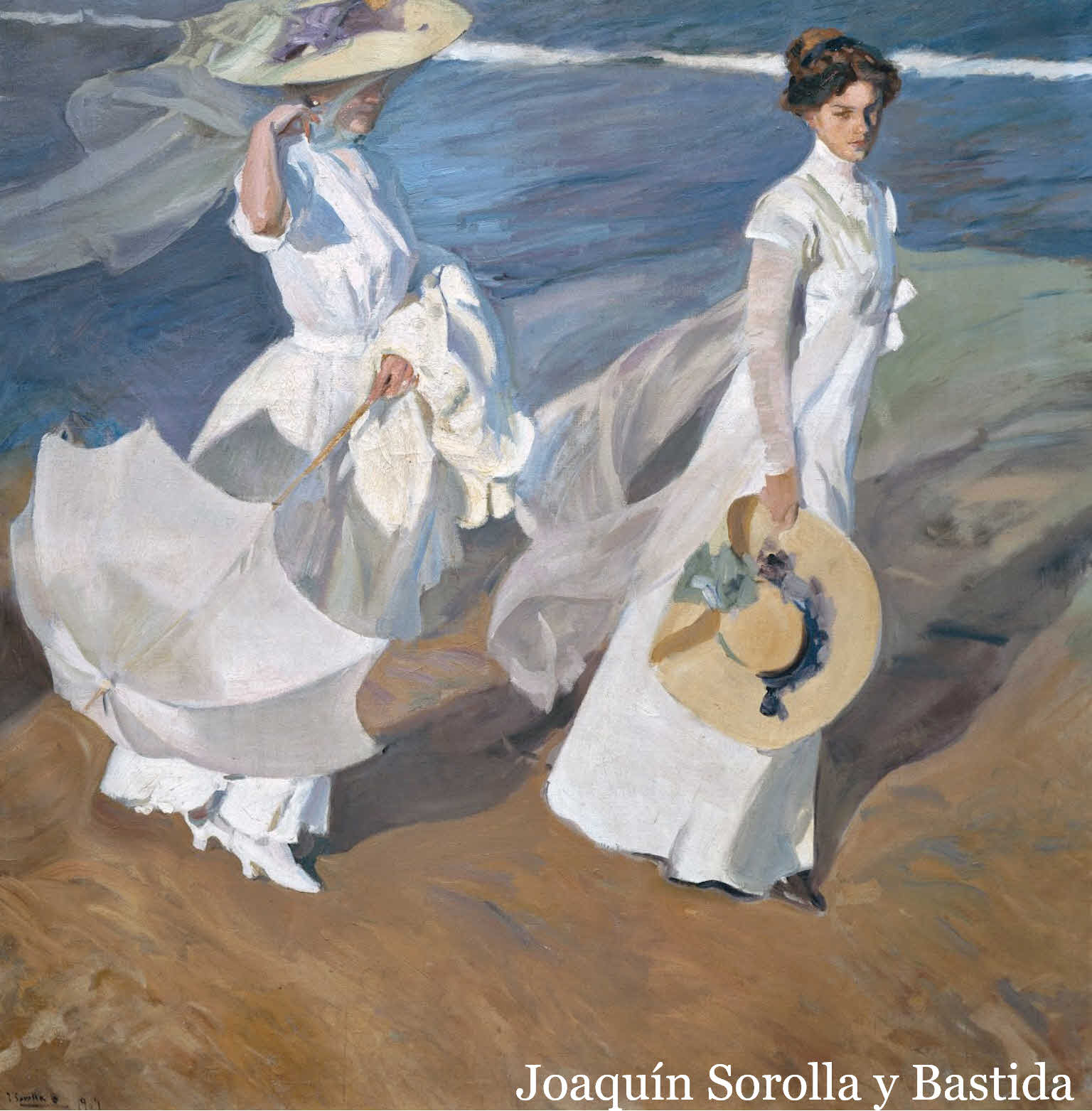
Healing through Light: The Historical Context and Psychology of Joaquín Sorolla’s 'Eternal Summer'
1. Historical Context: The Luminism of 1909
Painted in 1909 at El Cabañal beach in Valencia, Paseo a orillas del mar (Walk on the Beach) represents the pinnacle of Joaquín Sorolla’s career. This was the year Sorolla achieved unprecedented international acclaim during his exhibition at the Hispanic Society of America in New York. While Europe was on the brink of radical avant-garde movements, Sorolla stayed true to Luminism—a style focused on the masterful depiction of natural light.
The figures in the painting are his wife, Clotilde García del Castillo, and their eldest daughter, María. At a time when Spain was grappling with post-imperial identity, Sorolla’s work offered a vision of modern, elegant, and serene Spanish life, becoming a cultural symbol of optimism and vitality.
2. The James-Lange Flow: Physiological Relaxation
In our Art-Psychology Layering System, we utilize the James-Lange Theory, which suggests that "we feel sorry because we cry, angry because we strike, afraid because we tremble." When users express emotional heaviness, our system responds with Sorolla's imagery to trigger a specific physiological sequence.
By presenting the overwhelming brightness of the Mediterranean, we bypass the conscious mind to stimulate the autonomic nervous system. The suggestion of warmth and the expansive horizon encourages the body to relax first; the deepened breath and lowered heart rate eventually synthesize into a feeling of 'tranquility'.
3.1. Visual Stimuli: The Synesthetic Liberation of White and Blue
Sorolla’s palette is dominated by a dazzling range of whites—from creamy pearls to brilliant snow—infused with Mediterranean blues.
- Psychological Purification: Pure white functions as a 'reset' for the visual cortex, signifying new beginnings, while the varying blues lower cortisol levels, the primary stress hormone.
- Mnemonics of Freedom: This specific color contrast activates the hippocampus, recalling memories of 'vacation'—periods of life free from societal pressure and cognitive load.
3.2. Embodied Cognition: Taking in 'Visual Vitamin D'
Sorolla treats light as a physical substance. The bold, impasto brushstrokes reflecting off the sand are not just seen but felt. This is a prime example of Embodied Cognition—a psychological phenomenon where visual input is translated into tactile sensations of warmth.
3.3. The Motion of Liberty: Fluttering Fabrics
The billowing white dresses and the sheer veil of the hat capture a fleeting moment of wind. This dynamic element breaks the 'stiffness' of daily life. As the viewer subconsciously traces the movement of the fabric, their own breathing rhythm expands, easing muscular tension through vicarious liberation.